
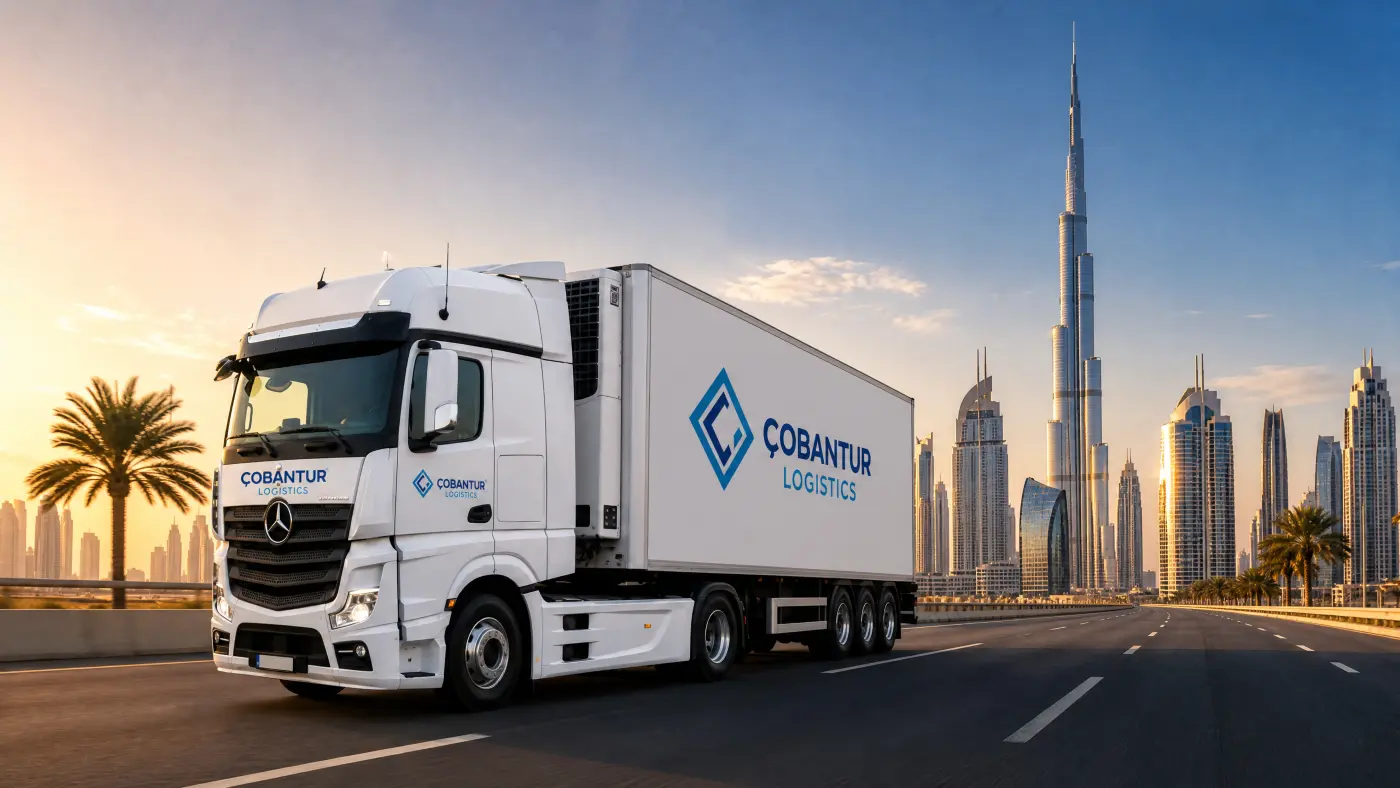
The United Arab Emirates is one of Turkey’s most important trading partners in the Middle East. For shipments to the UAE, particularly Dubai, road transport offers an alternative to sea freight through flexible loading capacity and direct access via the Iran–Iraq–Saudi Arabia corridor. In this guide, we cover the fundamental steps of road shipment from Turkey to Dubai.
The Road Route from Turkey to Dubai
Road shipments from Turkey to the UAE pass through several transit countries depending on the route. When planning the route, the current crossing rules and possible restrictions of each transit country are evaluated in advance, keeping the shipment on a predictable timeline.
Customs and Transit Documents
For shipments on this route, the TIR carnet, transit declaration, and import documents required by the destination country are critical. Preparing these documents completely before shipment is the most effective step in preventing delays at border points.
Delivery Time and Planning
Delivery time by road to Dubai varies depending on the route, border congestion, and seasonal factors. Given this variability, it is recommended to build the shipment schedule with buffer time and realistic planning.
Conclusion
Road transport from Turkey to Dubai and the UAE is a reliable alternative when the route and documentation are planned correctly. Çobantur offers its operational experience on this corridor as a predictable shipment process for its customers.
FAQ
How many transit countries does a road shipment from Turkey to Dubai pass through?
This varies by route, but shipments generally follow a corridor through Iran and neighboring countries; the required documents for each transit country are prepared in advance.
What types of cargo suit road shipment to Dubai?
It suits a wide range of cargo, including general cargo, project loads, and partial shipments; vehicle selection is made according to the cargo’s characteristics.
How is the risk of delay reduced during shipment?
Preparing documents completely, following current transit rules, and managing the process transparently through vehicle tracking systems significantly reduce the risk of delay.