

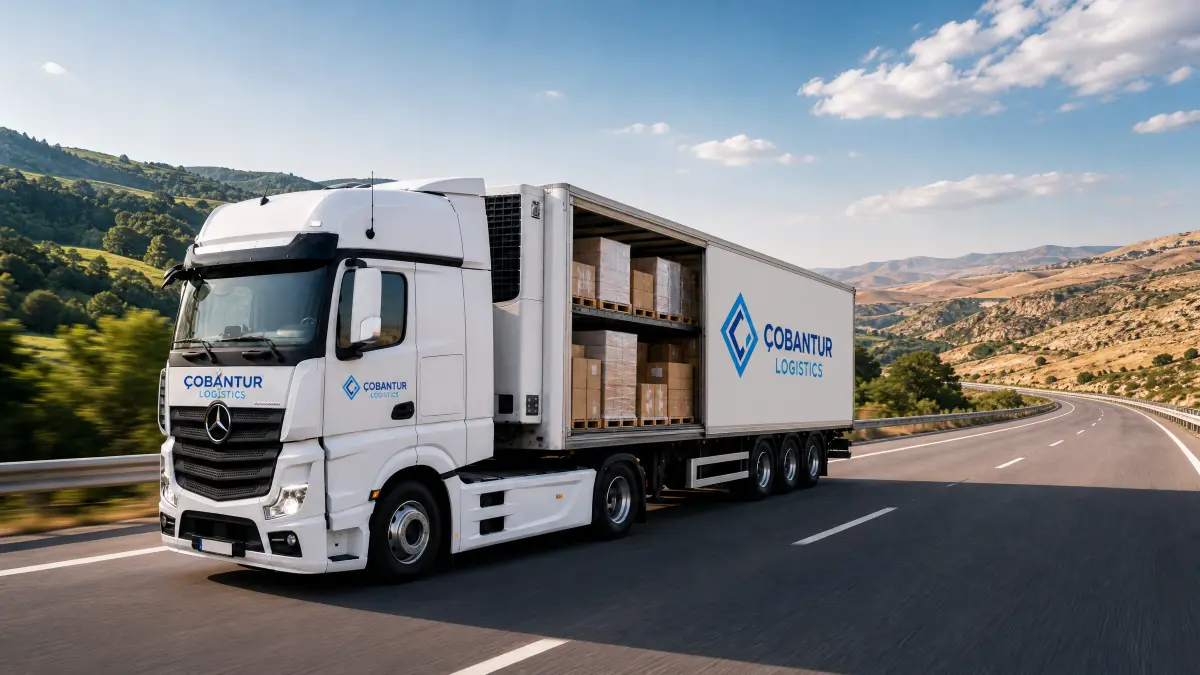
Not every business has enough cargo volume to fill an entire truck. For companies that make regular but small- and medium-volume shipments between Germany and Türkiye, partial load transportation (LTL – Less than Truckload) offers a cost-effective and operationally flexible logistics solution.
In partial load transportation, shipments belonging to different customers and moving along the same route are consolidated in a single vehicle. This allows businesses to pay only for the capacity they use rather than covering the full cost of an entire truck.
What Is Partial Load Transportation?
Partial load transportation is a shipping method in which cargo that does not fill an entire vehicle is combined with other shipments travelling along the same or a similar route.
This method is particularly suitable for shipments consisting of several pallets, cartons or a limited volume of goods. It provides an economical alternative for businesses that do not require a full truckload.
In addition to small and medium-sized enterprises, companies that regularly import or export goods can also use partial transportation to manage their logistics costs more efficiently.
When Should Partial Load Transportation Be Preferred?
Partial load transportation can be preferred especially when:
- The shipment does not fill an entire truck,
- Regular shipments consist of only a few pallets or cartons,
- Paying for a full truck is unnecessary,
- Goods are shipped regularly between Germany and Türkiye,
- Logistics costs need to be optimized.
With regular partial load services, businesses can plan their shipments without waiting until they have enough cargo to fill an entire truck.
How Does Partial Transportation Work Between Germany and Türkiye?
Partial transportation operations between Germany and Türkiye are planned through designated collection points and regular departure schedules.
Shipments belonging to different customers are collected at departure or consolidation points in Germany. After the necessary checks are completed, cargo travelling along the same route is loaded onto suitable vehicles.
Once the vehicle arrives in Türkiye, shipments are separated according to their delivery regions and directed to the relevant distribution points.
Operating according to a regular departure schedule makes both loading processes and delivery times more predictable.
Cost Advantages of Partial Load Transportation
One of the main advantages of partial load transportation is that businesses pay only for the transportation capacity they actually use.
Transportation costs are generally calculated according to:
- Cargo volume,
- Cargo weight,
- Number of pallets or cartons,
- Pickup and delivery locations,
- Specific handling and transportation requirements.
This system eliminates the need to hire an entire truck for small-volume shipments. As a result, businesses that ship goods regularly can manage their logistics costs more efficiently.
Delivery Times and the Advantage of Regular Departures
Delivery times in partial transportation depend on the consolidation and distribution process.
Regular departures between Germany and Türkiye help prevent cargo from waiting for long periods until a vehicle is completely full. Scheduled departures on specific days also allow businesses to plan their shipping and delivery processes more effectively.
When consolidation operations are well organized, partial load transportation offers not only cost advantages but also predictable delivery times.
Cargo Safety in Partial Load Transportation
Since a single vehicle may carry shipments belonging to different customers, proper cargo management is especially important in partial transportation.
Shipments are individually identified according to their destinations, properly secured inside the vehicle and carefully controlled during loading and unloading operations.
With proper operational planning, the risk of cargo being mixed up, delivered to the wrong destination or damaged during transportation can be significantly reduced.
Germany-Türkiye Partial Load Transportation Solutions
Partial transportation on the Germany-Türkiye route provides a balanced logistics solution in terms of cost, flexibility and delivery planning for businesses with regular shipments that do not require a full truckload.
Çobantur supports businesses with flexible partial transportation alternatives for different cargo volumes through its regular transportation infrastructure between Germany and Türkiye, helping companies plan their logistics operations more efficiently.
Frequently Asked Questions
What shipment volumes are suitable for partial load transportation?
Partial transportation is suitable for shipments that do not fill an entire vehicle. It is commonly preferred for several pallets, cartons or small- and medium-volume commercial cargo. Exact capacity and transportation conditions may vary depending on the route, cargo characteristics and vehicle type.
Are partial shipments slower than full truckload transportation?
Because partial transportation includes consolidation and distribution processes, delivery times may differ from full truckload transportation. However, on routes with regular departures, this difference can remain limited and delivery times can usually be planned in advance.
How is cargo safety ensured in partial load transportation?
Shipments belonging to different customers are individually identified, properly secured inside the vehicle and checked during loading and unloading. These procedures help reduce the risk of cargo being mixed up, incorrectly delivered or damaged.
Can partial cargo be shipped from Germany to Türkiye?
Yes. Partial shipments collected from different regions of Germany can be consolidated at designated locations, transported to Türkiye and distributed according to their final delivery destinations.
Is partial transportation available from Türkiye to Germany?
Yes. Partial transportation can be used both for import shipments from Germany to Türkiye and for export shipments from Türkiye to Germany.
How is the cost of partial transportation calculated?
Transportation costs are generally determined based on cargo weight, volume, number of pallets or cartons, pickup location, delivery address and any special handling or transportation requirements.