

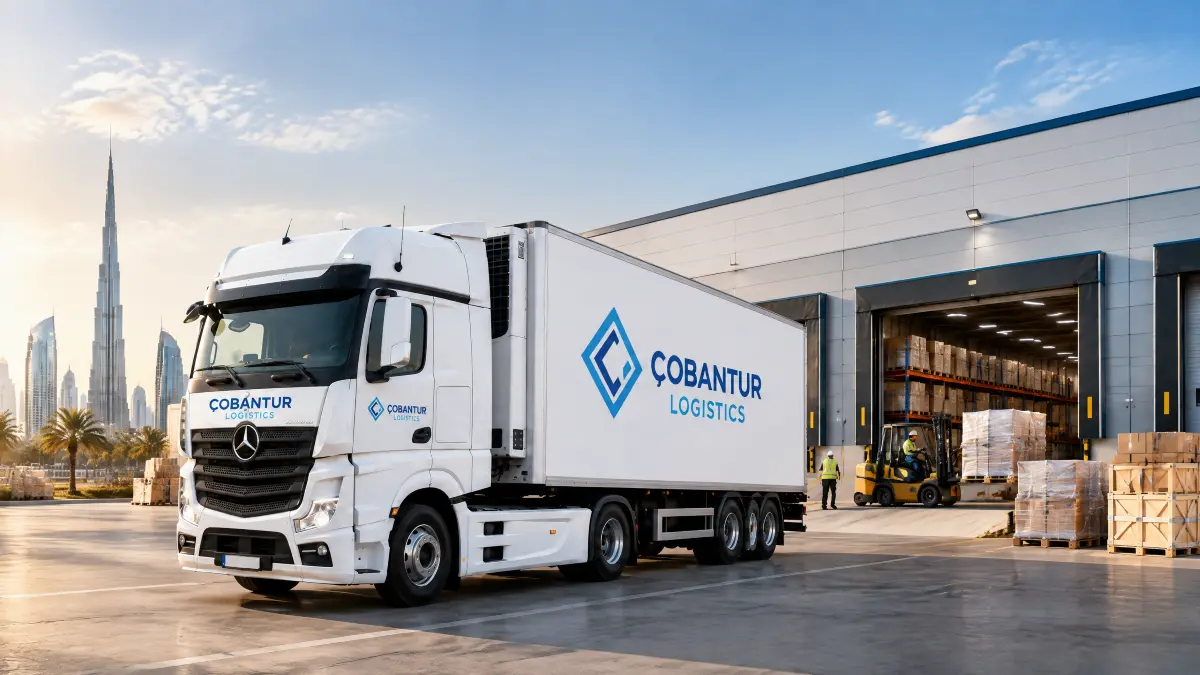
For businesses that ship regularly to Dubai but in relatively small volumes, booking a full truck is not always the most efficient or cost-effective option. Less-than-truckload (LTL) shipping combined with integrated warehousing solutions provides a more flexible alternative in terms of both transportation costs and inventory management.
Who Is LTL Shipping to Dubai Suitable For?
LTL shipping is particularly suitable for small and medium-sized exporters, e-commerce businesses, and companies with regular but limited shipment volumes.
This model allows businesses to access the Dubai market on a regular basis without bearing the cost of a full truckload. By consolidating shipments from multiple customers within the same vehicle, transport capacity can be used more efficiently and shipping costs can be shared.
Integrated LTL Shipping and Warehousing Solutions
For some businesses, it may be more advantageous to transport goods first to a warehouse in Dubai rather than delivering them directly to the final destination.
LTL shipping integrated with warehousing services allows companies to manage inventory according to actual demand. Goods can be transported to Dubai in consolidated shipments, stored locally, and distributed gradually whenever required.
This approach provides greater operational flexibility and can reduce the need for frequent or urgent international shipments.
It is especially beneficial for companies with fluctuating order volumes or businesses that need to make regular deliveries to multiple customers in Dubai and the surrounding region.
LTL Shipping Process and Required Documents
As with other international transportation operations, documents required for customs and transit procedures must be prepared accurately and completely for LTL shipments to Dubai.
Depending on the type of cargo and transportation model, the following documents may be required:
- Commercial Invoice
- Packing List
- Transport and transit documents
- Customs declarations
- Product-specific permits or certificates
- TIR Carnet or other relevant transit documents, where applicable
For consolidated shipments, the documentation for each customer and each individual shipment should be prepared separately and accurately.
Proper documentation helps prevent confusion during customs clearance and reduces the risk of delays in the logistics process.
Advantages of LTL Shipping and Warehousing
Combining LTL transportation with warehousing services can provide businesses with several important advantages:
- Regular shipments without the cost of a full truckload
- Cost efficiency for small and medium-sized cargo volumes
- Ability to maintain local inventory in Dubai
- Gradual distribution according to customer demand
- More flexible inventory and shipment planning
- Reduced need for urgent and repeated international shipments
- Faster local deliveries to multiple customers
Conclusion
The integration of LTL transportation and warehousing services in Dubai enables small and medium-sized businesses to access the Dubai and United Arab Emirates market in a more regular, flexible, and cost-efficient manner.
With properly planned consolidation, warehousing, and distribution processes, businesses can manage logistics costs more effectively while responding faster to changing customer requirements.
Çobantur provides practical and sustainable logistics solutions for businesses through its operational infrastructure, LTL transportation services, and warehousing capabilities on the Dubai route.
Frequently Asked Questions (FAQ)
Does using LTL transportation and warehousing together create additional costs?
Warehousing services are generally priced separately from transportation. However, shipping larger consolidated volumes and distributing products gradually from local inventory can help reduce the costs associated with urgent and repeated international shipments.
Which businesses benefit most from this model?
Small and medium-sized businesses with regular but fluctuating order volumes and companies that want to manage inventory according to customer demand can benefit significantly from this model.
It is particularly suitable for exporters, distributors, e-commerce companies, and businesses making regular deliveries to customers in Dubai.
How are delivery times planned for LTL shipments?
Delivery times for LTL shipments depend on factors such as consolidation schedules, departure frequency, route planning, customs procedures, and local distribution arrangements.
Regular departure schedules make delivery planning more predictable. When warehousing is integrated into the operation, products can also be supplied directly from local stock in Dubai, significantly reducing final-mile delivery times.