
The global trade ecosystem has undergone a profound transformation in recent years due to geopolitical tensions, pandemics, energy crises, port congestion, raw material shortages, and unpredictable fluctuations in ocean freight rates. For many years, companies moved their production operations thousands of kilometers away from their primary markets in pursuit of lower manufacturing costs. Today, however, businesses have realized that focusing solely on low production expenses is no longer a sustainable strategy.
Even when manufacturing costs are lower, long delivery times, port delays, container shortages, customs bottlenecks, and disruptions caused by global crises can create significant financial losses. As a result, companies are now evaluating their supply chains not only in terms of cost, but also according to speed, reliability, flexibility, sustainability, and resilience.
One of the most visible outcomes of this transformation is the rise of a new sourcing and production strategy known as “nearshoring.” Nearshoring refers to relocating the production or supply of raw materials, semi-finished goods, or final products to countries that are geographically closer to the main target markets.
This approach enables companies to maintain cost efficiency while significantly reducing the logistical risks associated with distant production centers. By shortening the physical distance between production and consumption markets, businesses can respond faster to demand changes, manage inventory more effectively, and improve supply chain continuity.
For companies serving the European market, Türkiye has become one of the most attractive nearshoring locations. Its proximity to Europe, advanced industrial infrastructure, strong manufacturing capabilities, skilled workforce, and extensive road connections position Türkiye as both a strategic production center and a major logistics hub.
As trade between Türkiye and Europe continues to expand, the need for reliable, fast, and uninterrupted transportation solutions is also increasing. In this new era, road transportation has emerged as one of the most important components of nearshoring strategies due to its flexible structure, rapid response capacity, door-to-door delivery model, and ability to create alternative routes during disruptions.
Why Has Nearshoring Become a New Global Trade Strategy?
In the past, many companies relocated production to distant regions in order to reduce manufacturing costs. However, recent disruptions in global supply chains have revealed how vulnerable a model based solely on low unit costs can be.
A product manufactured in a distant country must often be transported from the factory to the port, loaded into a container, wait for a vessel departure, complete a long ocean journey, pass through customs procedures at the destination port, and then be transferred to inland transportation. This entire process can take several weeks.
A minor disruption at any stage may delay delivery and affect production, sales, and customer satisfaction. Port congestion, maritime route closures, strikes, weather conditions, and customs delays can quickly turn a low-cost sourcing model into an expensive operational problem.
Nearshoring reduces these risks by bringing production closer to the target market. When manufacturing takes place in a nearby country, companies gain greater control over lead times and transportation processes.
This proximity allows businesses to respond faster to changing customer demands, shorten replenishment cycles, and reduce dependency on distant and complex logistics networks. Nearshoring also helps companies diversify their supply chains and avoid becoming overly dependent on a single country, route, or mode of transportation.
As a result, businesses can maintain production and distribution operations more effectively during periods of global uncertainty.
Türkiye’s Strategic Position in the Nearshoring Process
Türkiye is located at the crossroads of Europe, Asia, the Middle East, and the Caucasus. This geographical advantage makes it not only an important production center but also a regional logistics hub.
Many European destinations can be reached from Türkiye by road within a matter of days. Compared with shipments from the Far East, which may take several weeks, supply chains based in Türkiye offer a much faster and more manageable structure.
Türkiye also has a strong manufacturing base in industries such as automotive, textiles, white goods, machinery, chemicals, food, packaging, electronics, and consumer goods. International companies that wish to manufacture closer to the European market can cooperate with Turkish producers to reduce lead times and manage inventory more efficiently.
However, relocating production closer to the market is not enough on its own. A fast, secure, and uninterrupted logistics connection must also be established between production centers and target markets.
This is where road transportation between Türkiye and Europe becomes critically important. The effectiveness of a nearshoring strategy depends heavily on the ability to move goods quickly, reliably, and flexibly across borders.
The Advantages of Road Transportation in Nearshoring Strategies
The primary objective of nearshoring is to make supply chains faster, more flexible, and more resilient. Road transportation directly supports these goals through its operational structure and accessibility.
Fast Response and Short Transit Times
One of the main advantages of road transportation is its ability to provide short transit times. Shipments that may take several weeks by sea can often be completed within a few days by road.
Goods can be collected directly from the factory and delivered to the customer’s warehouse without waiting for vessel schedules or lengthy port procedures. This significantly reduces time losses caused by port congestion, container handling, and multiple transfers.
Speed is especially important in industries where production plans change frequently or customer demand must be met within a short period. In sectors such as automotive, fashion, retail, electronics, and fast-moving consumer goods, even a few days of delay can stop a production line or lead to lost sales opportunities.
Road transportation enables businesses to react quickly to such risks and maintain operational continuity.
Uninterrupted Door-to-Door Delivery
Road transportation allows goods to be collected from the point of origin and delivered directly to the final destination. This door-to-door model reduces the number of transfers and handling procedures during the shipment process.
Fewer transfers also mean a lower risk of damage, loss, or operational errors. This advantage is especially valuable for sensitive, high-value, fragile, or specially handled goods.
When the same vehicle or a coordinated transportation plan is used throughout the journey, the shipment can be monitored and controlled more effectively.
Customers can track the movement of their goods, receive updated delivery information, and organize production or sales plans based on more reliable data.
Flexibility Through Full Truckload and Less-Than-Truckload Solutions
The logistics requirements of companies using a nearshoring model are not always the same. During some periods, a company may have enough cargo to fill an entire truck, while at other times it may need smaller and more frequent shipments.
Road transportation offers significant flexibility through both full truckload and less-than-truckload services. In full truckload transportation, the entire vehicle is allocated to a single customer’s cargo.
In less-than-truckload transportation, shipments from different customers traveling along the same route can be consolidated in one vehicle.
Less-than-truckload solutions allow smaller cargo volumes to be transported at a more cost-effective rate. Companies do not need to wait until they have enough goods to fill a complete truck or container.
Instead, they can ship the quantity they need at the appropriate time. This makes international trade more accessible, especially for small and medium-sized enterprises.
Lower Inventory and Warehousing Costs
In traditional long-distance sourcing models, companies often maintain large safety stocks due to long lead times and the risk of delays. However, high inventory levels tie up working capital and increase warehousing expenses.
The combination of nearshoring and road transportation allows companies to make smaller but more frequent shipments. Businesses can receive the required materials or products at the right time and reduce the need to hold excessive stock.
This structure supports the Just-in-Time production model. Raw materials, components, or finished products can be delivered when they are needed, helping companies use warehouse and production areas more efficiently.
Lower inventory levels also improve cash flow and reduce the risk of products becoming obsolete, damaged, or unsellable.
Rapid Adaptation to Changing Demand
Consumer behavior and market demand are changing faster than ever. Seasonal products, promotional campaigns, sudden increases in orders, or unexpected production requirements may require companies to revise their logistics plans within a very short time.
Road transportation helps businesses adapt quickly due to its high service frequency and operational flexibility. Additional vehicles can be arranged, shipment dates can be modified, and alternative routes can be created according to changing requirements.
This flexibility allows companies to maintain customer satisfaction and react faster than their competitors.
In modern commerce, competition is no longer based solely on product quality or price. The ability to deliver the right product at the right time has become a major competitive advantage.
The Role of Road Networks in Managing Global Risks
One of the key objectives of nearshoring is to create supply chains that are more resilient against global crises. However, bringing production closer to the market is only one part of the solution.
Companies must also diversify their transportation networks and reduce dependency on limited routes or infrastructure points.
Ocean transportation often depends on specific ports, canals, straits, and maritime corridors. A closure, strike, security issue, or congestion at one of these points can disrupt trade across a very large region.
Road transportation offers greater flexibility because operations can be redirected through alternative border gates, transit countries, and highway networks. When a problem occurs on one route, shipments may be transferred to another available corridor.
Smart route management systems can evaluate real-time traffic information, border waiting times, weather conditions, road restrictions, and operational risks to determine the most suitable route.
Potential delays can therefore be identified in advance, and preventive measures can be taken before they affect the final delivery.
Logistics companies with broad international networks and experienced operations teams can provide alternative solutions during crisis periods and help customers maintain supply chain continuity.
Digitalization and Smart Logistics Applications
The strategic importance of road transportation in nearshoring is not limited to the number of vehicles or available routes. Digital technologies make logistics operations more transparent, measurable, and efficient.
Vehicle tracking systems allow shipments to be monitored in real time. Estimated arrival times can be calculated, delay risks can be identified, and customers can receive regular updates throughout the transportation process.
Digital operation management systems enable companies to control shipment planning, customs procedures, driver management, vehicle performance, and delivery reporting from a single platform.
This reduces human error and helps operations move faster and more efficiently.
Data-driven route optimization can also reduce empty mileage, lower fuel consumption, improve vehicle utilization, and increase on-time delivery performance.
As a result, companies can control logistics costs while also contributing to environmental sustainability.
Nearshoring for More Sustainable Supply Chains
Sustainability has become one of the main criteria companies consider when designing their supply chain strategies. Transporting products from one side of the world to the other often requires greater energy consumption and may create a larger environmental impact due to the long distance involved.
Nearshoring can help reduce transportation distances between production and consumption markets. This may limit the environmental effects associated with long-distance logistics.
The use of modern vehicles, low-emission technologies, efficient fleet management, and route optimization also supports this process.
Increasing vehicle occupancy rates, consolidating partial loads effectively, and reducing empty return journeys can lower carbon emissions per unit of cargo.
Sustainable logistics practices are not only an environmental responsibility. They are also important for meeting customer expectations, strengthening corporate reputation, and preparing for future legal and regulatory requirements.
Companies that invest in more efficient and transparent transportation models can improve both their environmental performance and their long-term competitiveness.
The Importance of Choosing a Reliable Logistics Partner
In order to achieve the expected benefits of nearshoring, strong logistics coordination must be established between production centers and target markets.
For this reason, the experience and operational capacity of the logistics provider are just as important as the selected transportation model.
A reliable logistics partner should have a strong vehicle fleet, an extensive agency and service network, experienced operations teams, and knowledge of cross-border transportation.
Expertise in customs procedures, transit documentation, country-specific regulations, and delivery requirements is essential for ensuring uninterrupted international road transportation.
Customers also need transparent communication, regular shipment tracking, and fast solutions when unexpected problems occur.
Logistics should not be considered merely as the movement of goods from one location to another.
Effective logistics management directly supports production planning, customer relationships, business continuity, and corporate reputation.
Uninterrupted Transportation on the Türkiye-Europe Corridor with Çobantur
Closely following the changing dynamics of global trade created by the nearshoring trend, Çobantur provides flexible, reliable, and sustainable road transportation solutions across the Türkiye-Europe logistics corridor.
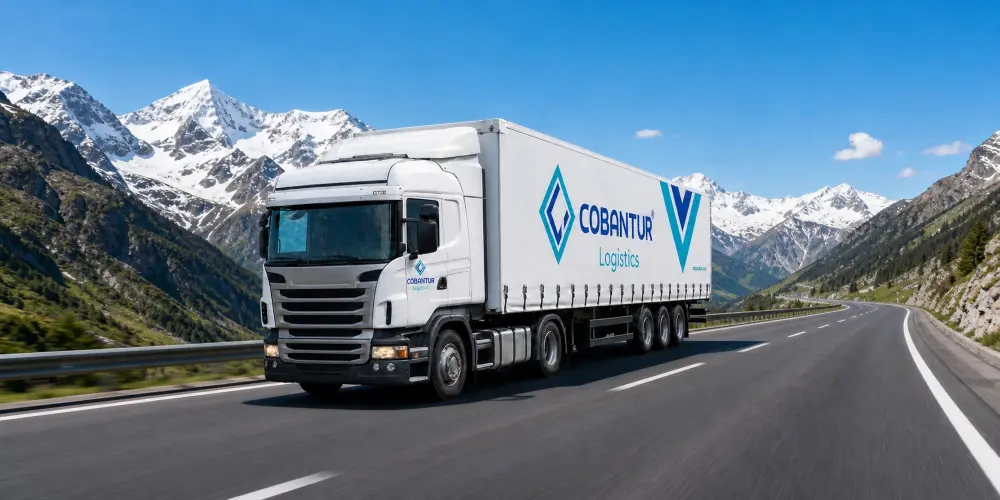
With its long-standing experience in road freight transportation, extensive vehicle fleet, and cross-border operational capabilities, Çobantur manages both full truckload and less-than-truckload requirements in line with the production and delivery schedules of its customers.
Through optimized smart route management, operational monitoring systems, and the ability to create alternative routes, shipment processes are continuously controlled against potential risks.
This ensures that goods are transported from the point of origin to the final destination safely, transparently, and within the planned delivery period.
Çobantur’s logistics solutions do more than meet current transportation needs. They also help businesses build more agile and resilient supply chains.
Shorter transit times, regular services, flexible shipment models, and full truckload and less-than-truckload alternatives allow companies to optimize inventory levels and respond faster to changing customer demands.
By combining operational experience with technology-driven logistics management, Çobantur supports businesses seeking to strengthen their competitiveness in European markets.
Its ability to manage cross-border operations, adapt routes, and provide continuous shipment visibility makes it a strong logistics partner for companies adopting a nearshoring strategy.
Nearshoring should not be viewed as a temporary trend in global trade. It represents a lasting transformation that is reshaping production, sourcing, and supply chain strategies.
Companies are no longer searching only for the lowest-cost manufacturing location. They are increasingly prioritizing supply structures that are close to their main markets, reliable, fast, flexible, and resilient against global disruptions.
Türkiye’s proximity to Europe and strong industrial infrastructure make it one of the leading locations in this transformation.
However, fully benefiting from Türkiye’s nearshoring potential depends on establishing uninterrupted and flexible logistics connections between Türkiye and European markets.
Road transportation plays a strategic role in this process through its short transit times, door-to-door delivery model, full truckload and less-than-truckload options, alternative route capabilities, and support for Just-in-Time production.
With its expertise in the Türkiye-Europe logistics corridor, Çobantur helps businesses protect their production and distribution processes from global uncertainty while adding speed, flexibility, and reliability to their supply chains.
Through well-planned road logistics, companies can not only meet today’s operational requirements but also prepare for the more agile, sustainable, and competitive trade environment of the future.