
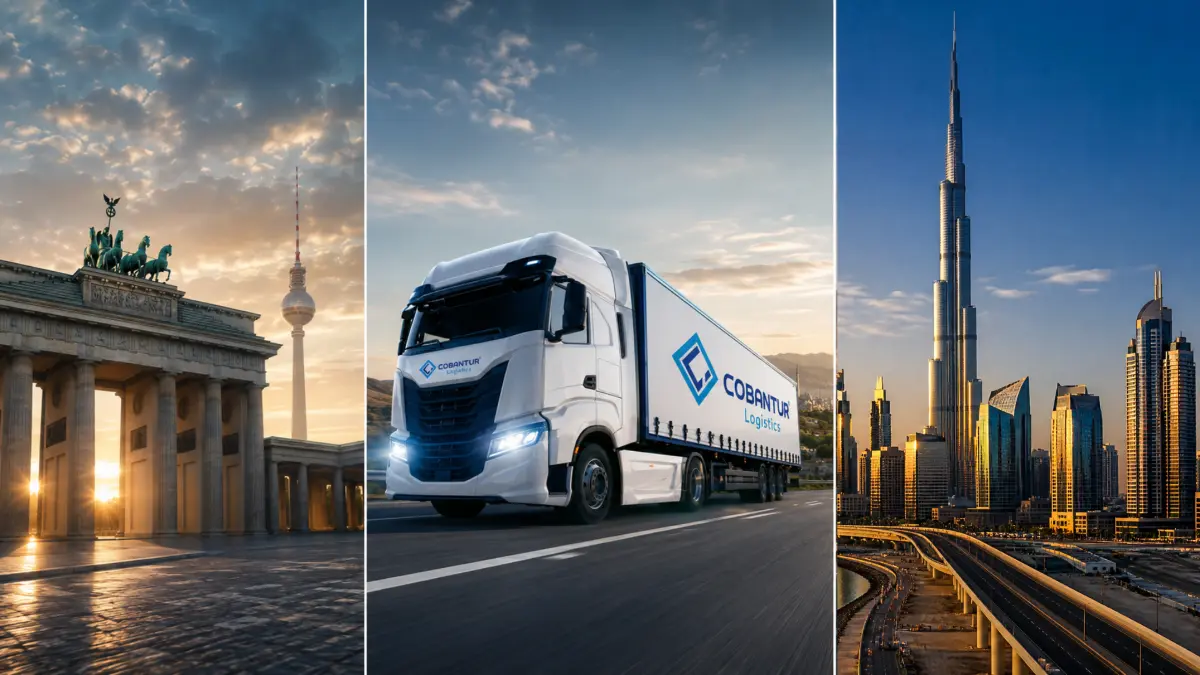
When exporting from Germany to Middle Eastern markets, sea or air freight is not always the fastest or most flexible solution. Road transport offers a strong alternative, especially for partial loads and time-sensitive shipments, by creating a bridge route through Türkiye and enabling end-to-end transportation between Germany and the Middle East under a single management structure.
Why Is Road Transport Preferred on the Germany–Middle East Route?
In sea freight, port waiting times and multiple transshipment points can extend delivery times. Road transport, on the other hand, allows cargo departing from Germany to reach the Middle East through Türkiye via a continuous and controlled route.
This structure helps create a more predictable delivery schedule, particularly for medium-volume and time-sensitive shipments.
Route and Transit Process
A shipment departing from Germany reaches Türkiye via Central Europe and is then consolidated for the onward route to the Middle East or transferred directly depending on the operational plan.
Türkiye’s geographical position makes it a natural transit point between Europe and the Middle East. This allows routes to be planned more efficiently and with fewer unnecessary transfers, providing greater operational control throughout the journey.
The Çobantur Difference: End-to-End Management
Çobantur manages Germany-origin shipments all the way to the Middle East through Türkiye under a single operations team and a single line of responsibility.
Vehicle tracking and regular shipment updates throughout every stage of transportation help reduce the risk of coordination issues between multiple carriers. As a result, customers can follow the entire operation through a single point of contact.
Conclusion
Road transport from Germany to the Middle East can provide a fast, flexible, and predictable logistics solution when properly planned.
With its operational experience on routes passing through Türkiye and its end-to-end management approach, Çobantur offers Germany-based businesses a reliable alternative for transportation to Middle Eastern markets.
Frequently Asked Questions
How long does road transport from Germany to the Middle East take?
Transit time may vary depending on the departure point, destination country, selected route, and congestion at border crossings. When the route is properly planned through Türkiye, the transportation process becomes more controlled and predictable.
What types of cargo are suitable for this route?
The Germany–Middle East road transport route is suitable for a wide range of cargo types, including medium and large-volume shipments, time-sensitive cargo, and partial loads (LTL). Vehicle and route planning are carried out according to the specific characteristics of the cargo.
Does transit through Türkiye create an additional customs burden?
When the required transit documents and customs procedures are prepared correctly in advance, the process can be managed as a standard operational stage. Transit transportation handled by an experienced operations team helps ensure a smoother and more controlled process.