

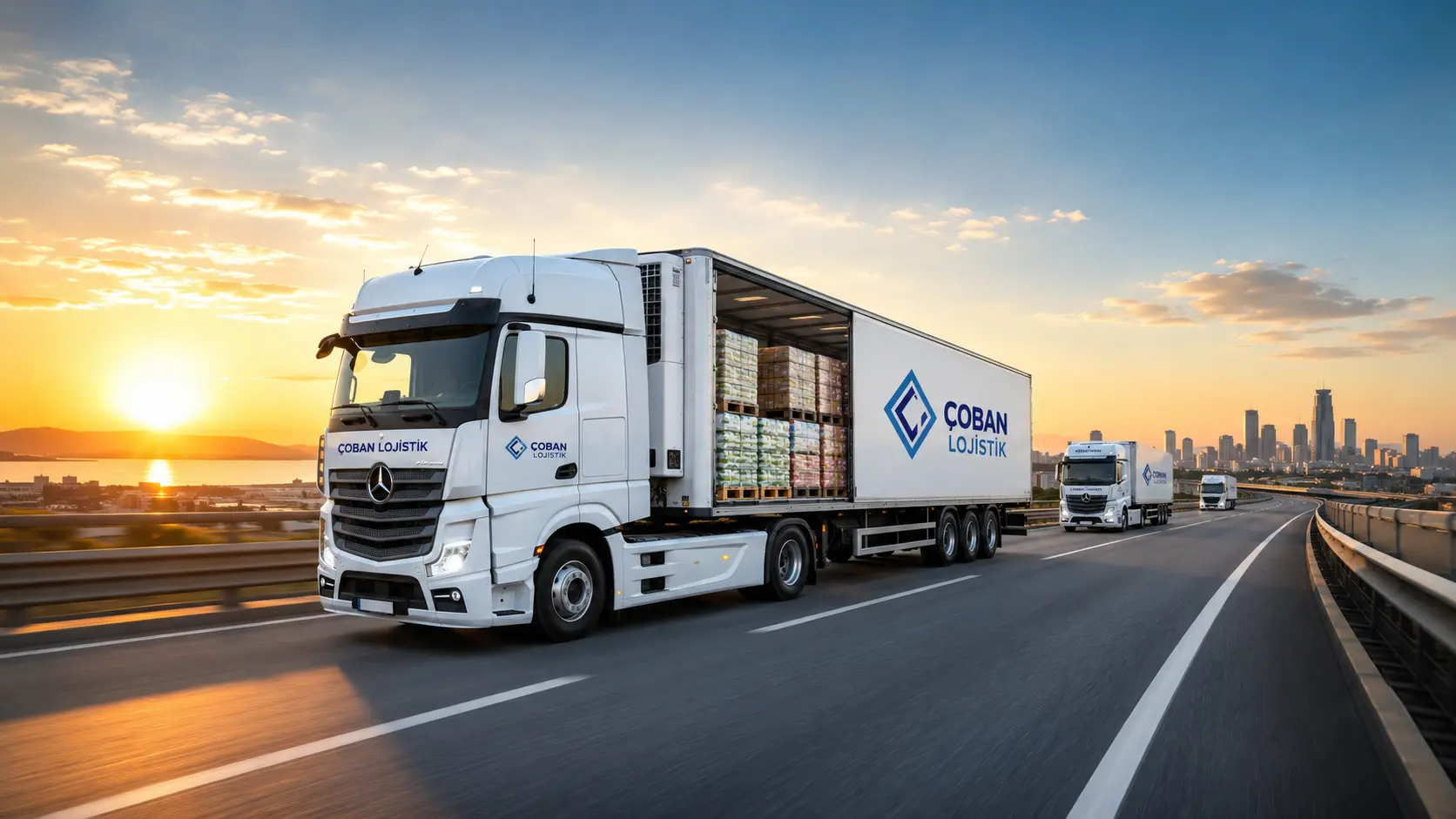
Transporting food products by road requires far more attention and responsibility than transporting a standard cargo. What is at stake here is no longer just moving a load from point A to point B; it is preserving the integrity, cleanliness, and freshness of a product that will reach the consumer’s table. In this article, we discuss the operational discipline Çobantur applies in food transportation.
Vehicle and Cargo Bed Cleanliness
For a vehicle to carry a food load, it must first be free of any trace of its previous cargo. Food is never loaded directly after a cargo that could leave odor, dust, moisture, or any residue in the cargo bed; vehicles are inspected before loading and a cleaning procedure is applied when necessary. This information about the previous cargo is the first step in planning a food shipment.
Loading and Stacking Discipline
How food products are positioned inside the vehicle directly determines whether the product arrives intact. Stacking packages without tipping, crushing, or pressing against each other, with heavier products at the bottom and delicately packaged products on top, is a fundamental rule. Likewise, never transporting food in the same vehicle together with odor-emitting or chemical-containing products is one of the unchangeable principles of load planning.
Preserving Packaging Integrity
The packaging of a food product must maintain its integrity at every moment of the journey — during loading, in transit, and during unloading. Shock-resistant securing techniques, correct pallet arrangement, and the use of in-vehicle load-securing equipment are the fundamental practices that prevent packaging damage. Delivery with damaged or opened packaging is not an acceptable situation in food transportation; therefore, packaging inspection before unloading is also part of the process.
Documentation and Traceability
In food shipments, it is important not only that the paperwork is complete, but also that the load is traceable from its source to the delivery point. Correctly and completely preparing shipment documents, recording loading and unloading times, and being able to transparently track the process through vehicle tracking systems are elements that build trust for both the customer and the recipient.
On-Time Delivery
Timing in food products is directly related to the product’s shelf life. For this reason, when planning the route, possible delay points (border crossings, heavy traffic hours) are evaluated in advance, and a shipment schedule tied to the delivery time is created. A predictable delivery process forms the foundation of customer satisfaction in food transportation.
Çobantur carries its years of operational experience in road transportation into food product shipments as well, making clean, intact, and on-time delivery a standard practice.
Conclusion: Discipline Is the Foundation of Trust in Food Transportation
Transporting food products by road requires managing elements such as hygiene, correct stacking, packaging integrity, and timing as a whole. Çobantur makes this discipline a standard practice in every shipment, ensuring that your food product arrives clean, intact, and on time.
FAQ
How is vehicle selection made in food transportation?
Vehicles are evaluated based on their previous cargo history; food is never loaded directly after a cargo that carries a risk of odor, residue, or contamination, and a cleaning procedure is applied when necessary.
Can food products be transported in the same vehicle with other loads?
Food is never transported in the same vehicle together with odor-emitting or chemical-containing products; load planning takes this distinction into account.
Is a food load with damaged packaging delivered?
No. Packaging is inspected before unloading; delivery with damaged or opened packaging is not an acceptable situation.