
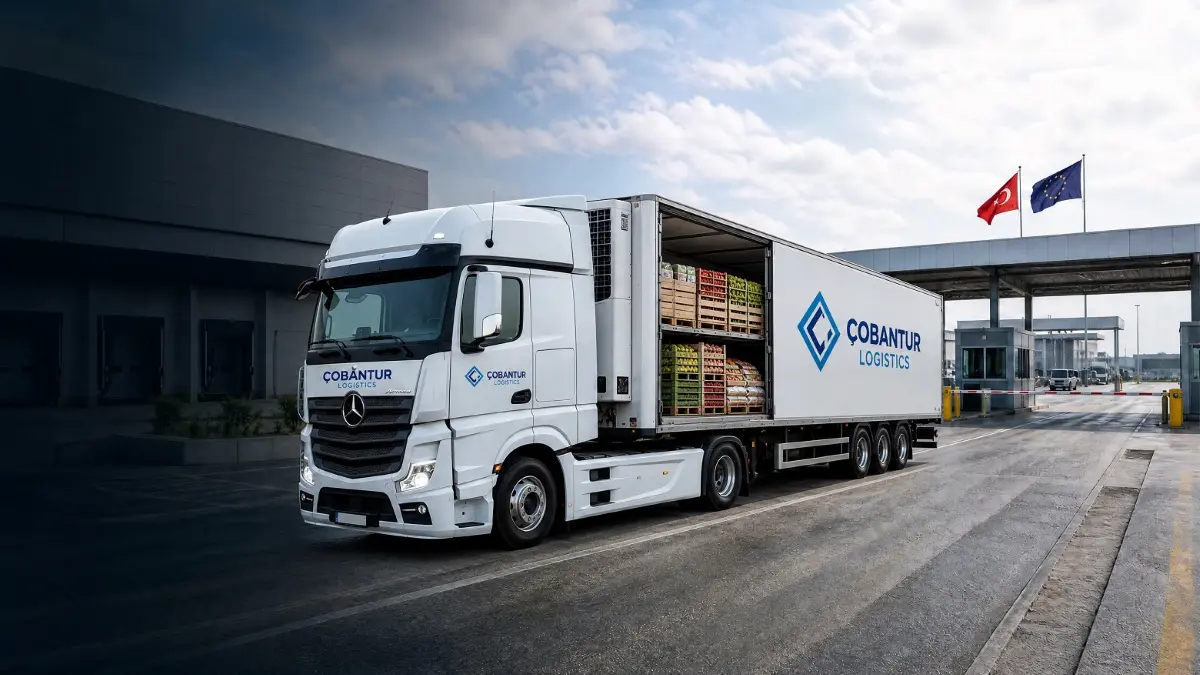
For businesses exporting food from Turkey to Europe, road transportation is a preferred method for both its speed and flexibility. However, if not planned correctly, the process can lead to customs delays and delivery risks. In this guide, we cover the fundamental steps of the road shipment process in food exports.
Document Preparation Before Export
In the export of food products, in addition to standard export documents (invoice, packing list, export declaration), product-specific documents may also be required: certificate of origin, health/veterinary certificates, or additional food safety documents requested by the destination country. Preparing these documents completely before shipment is the most critical step in preventing delays that could occur at customs.
Customs Process and Border Crossing
In road shipments to Europe, the vehicle passes through multiple border points, starting from the exit customs and continuing to the destination country. Transit document and quota restrictions (Dozvola) that may be encountered at this point can directly affect the process; we covered this documentation system and possible crisis points in more detail in our article “How Are Border Crossings and the Dozvola (Transit Permit) Crisis Managed in Road Transportation?” In food exports, special customs control procedures applied by some European countries for food products may also be part of the process.
Access to Europe via Trieste
Çobantur’s European headquarters and warehouse in Trieste serves as a strategic transit point for delivering food loads coming from Turkey to distribution points within Europe. This location offers an advantage that shortens route planning, especially for shipments to the Balkans and Central Europe.
Tracking and Coordination During Shipment
During the export process, providing regular updates from the moment the load departs to the delivery point is important for both the exporter and the receiving company. Sharing the shipment’s real-time status through vehicle tracking systems makes it possible to take early action in the event of a possible delay.
Delivery and Beyond
The process is completed when the load is received at the destination point; however, checking the packaging and documents at the time of delivery is the final step that protects both parties in the event of a possible dispute.
For businesses exporting food from Turkey to Europe, correct logistics planning requires management that covers not just transportation, but the entirety of documentation, customs, and delivery processes. Çobantur manages this process end-to-end with its experience on the Turkey–Italy route and its infrastructure in Trieste.
Conclusion: Correct Planning Means a Seamless Export Process
Road transportation in food exports from Turkey to Europe requires holistic management, from document preparation to the customs process, from shipment tracking to delivery. Çobantur manages this process end-to-end with its experience on the Turkey–Italy route and its infrastructure in Trieste, offering exporters a predictable and reliable solution.
FAQ
What additional documents may be required beyond the standard documents in food exports?
In addition to the invoice, packing list, and export declaration, a certificate of origin, health/veterinary certificates, or additional food safety documents requested by the destination country may be required.
Does the customs process work differently for food loads than for standard loads?
General customs and border crossing procedures (Dozvola/transit documents) apply in the same way; in addition, some European countries may request special customs control procedures for food products.
How does the warehouse in Trieste contribute to the food export process?
The European headquarters in Trieste serves as a strategic transit point that shortens the route for delivering loads coming from Turkey to distribution points in the Balkans and Central Europe.
Deutsch
- Straßentransport bei Lebensmittelexporten von der Türkei nach Europa: Leitfaden für Zoll- und Versandprozess
Für Unternehmen, die Lebensmittel von der Türkei nach Europa exportieren, ist der Straßentransport aufgrund seiner Geschwindigkeit und Flexibilität eine bevorzugte Methode. Wird der Prozess jedoch nicht richtig geplant, kann es zu Verzögerungen beim Zoll und zu Lieferrisiken kommen. In diesem Leitfaden behandeln wir die grundlegenden Schritte des Straßenversandprozesses bei Lebensmittelexporten.
Dokumentenvorbereitung vor dem Export
Beim Export von Lebensmittelprodukten können neben den Standardexportdokumenten (Rechnung, Packliste, Ausfuhranmeldung) auch produktspezifische Dokumente erforderlich sein: Ursprungszeugnis, Gesundheits-/Veterinärzertifikate oder zusätzliche vom Zielland geforderte Lebensmittelsicherheitsdokumente. Die vollständige Vorbereitung dieser Dokumente vor dem Versand ist der wichtigste Schritt zur Vermeidung möglicher Verzögerungen beim Zoll.
Zollprozess und Grenzübertritt
Bei Straßensendungen nach Europa durchquert das Fahrzeug, beginnend beim Ausgangszoll bis zum Zielland, mehrere Grenzpunkte. Die dabei möglicherweise auftretenden Transitdokument- und Quotenbeschränkungen (Dozvola) können den Prozess direkt beeinflussen; dieses Dokumentensystem und mögliche Krisenpunkte haben wir ausführlicher in unserem Beitrag „Wie werden Grenzübertritte und die Dozvola-Krise (Transitgenehmigung) im Straßentransport gemanagt?“ behandelt. Bei Lebensmittelexporten können zusätzlich spezielle Zollkontrollverfahren einiger europäischer Länder für Lebensmittelprodukte Teil des Prozesses sein.
Zugang nach Europa über Triest
Der europäische Hauptsitz und das Lager von Çobantur in Triest fungieren als strategischer Übergangspunkt für die Zustellung von Lebensmittelladungen aus der Türkei an Verteilungspunkte innerhalb Europas. Dieser Standort bietet insbesondere für Sendungen auf den Balkan und nach Mitteleuropa einen Vorteil, der die Routenplanung verkürzt.
Verfolgung und Koordination während des Versands
Während des Exportprozesses ist eine regelmäßige Information vom Abgang der Ladung bis zum Lieferpunkt sowohl für den Exporteur als auch für das Empfängerunternehmen wichtig. Das Teilen des aktuellen Sendungsstatus über Fahrzeugverfolgungssysteme ermöglicht es, im Falle einer möglichen Verzögerung frühzeitig zu handeln.
Lieferung und danach
Der Prozess wird mit der Übernahme der Ladung am Zielort abgeschlossen; die Kontrolle von Verpackung und Dokumenten zum Zeitpunkt der Lieferung ist jedoch der letzte Schritt, der beide Parteien im Falle einer möglichen Streitigkeit schützt.
Für Unternehmen, die Lebensmittel von der Türkei nach Europa exportieren, erfordert die richtige Logistikplanung ein Management, das nicht nur den Transport, sondern die Gesamtheit der Dokumentations-, Zoll- und Lieferprozesse umfasst. Çobantur managt diesen Prozess mit seiner Erfahrung auf der Route Türkei–Italien und seiner Infrastruktur in Triest von Anfang bis Ende.
Fazit: Richtige Planung bedeutet einen reibungslosen Exportprozess
Der Straßentransport bei Lebensmittelexporten von der Türkei nach Europa erfordert ein ganzheitliches Management, von der Dokumentenvorbereitung über den Zollprozess bis hin zur Sendungsverfolgung und Lieferung. Çobantur managt diesen Prozess mit seiner Erfahrung auf der Route Türkei–Italien und seiner Infrastruktur in Triest von Anfang bis Ende und bietet Exporteuren eine vorhersehbare und zuverlässige Lösung.
FAQ
Welche zusätzlichen Dokumente können bei Lebensmittelexporten über die Standarddokumente hinaus erforderlich sein?
Zusätzlich zu Rechnung, Packliste und Ausfuhranmeldung können ein Ursprungszeugnis, Gesundheits-/Veterinärzertifikate oder zusätzliche vom Zielland geforderte Lebensmittelsicherheitsdokumente erforderlich sein.
Läuft der Zollprozess bei Lebensmittelladungen anders ab als bei Standardladungen?
Die allgemeinen Zoll- und Grenzübertrittsverfahren (Dozvola/Transitdokumente) gelten in gleicher Weise; zusätzlich können einige europäische Länder spezielle Zollkontrollverfahren für Lebensmittelprodukte verlangen.
Wie trägt das Lager in Triest zum Lebensmittelexportprozess bei?
Der europäische Hauptsitz in Triest dient als strategischer Übergangspunkt, der die Route für die Zustellung von Ladungen aus der Türkei an Verteilungspunkte auf dem Balkan und in Mitteleuropa verkürzt.